

Most people give up on their New Year’s resolutions by February. This shows that without follow-through, goal setting can be costly.
This guide offers practical ways to keep an eye on your goals in both your personal and work life. It explains important ideas: “tracking goals” means watching your actions and outcomes closely; “goal tracking” is about keeping records of your progress; “goal setting” is deciding what results you want; “goal progress” shows how much you’ve moved towards your goal; and “goal management” is how you keep your goals in order and focus on what’s most important.
This is for students, workers, business owners, and anyone wanting to make systematic progress. You’ll learn about tools, tips, routines, and ways to check and adjust your goals. This will help you hit your targets and keep yourself responsible.
We’ll look at why keeping track of goals is key, different kinds of goals, online and offline tools, how to make SMART goals, and setting up daily and monthly systems to watch your progress. You’ll also learn how to use KPIs to measure your advances, tackle common hurdles, celebrate your wins, and constantly get better. We’ll often use phrases like ‘track goals’, ‘goal tracking’, ‘goal setting’, ‘goal progress’, and ‘goal planner’ to keep our advice easy to find and follow.
Understanding the Importance of Goal Tracking
Setting goals makes life and work clearer. They change uncertain dreams into detailed plans. Studies by Edwin Locke and Gary Latham found that well-defined, tough goals enhance performance more than vague ones.
Committing to goals helps focus and push through hard times. This dedication simplifies making plans. It guides decisions on using time and resources for reaching big goals.
Why Setting Goals Matters
Clear goals provide direction for daily choices. They point out what’s important, reducing effort on unnecessary tasks. With specific goals, both teams and people can make quicker, aligned decisions.
Moreover, goals drive motivation. Deciding on a goal increases the likelihood of sticking to it and using resources wisely. Having a definite goal also makes holding oneself or others accountable easier.
The Benefits of Tracking Progress
Tracking progress gives feedback on what works. It allows for quick fixes before small issues get big. This feedback helps maintain focus and momentum.
Checking progress regularly helps keep reality in check and enforces responsibility. Reviews, whether alone or with mentors, make achievements clear and repeatable. Noting small wins reduces stress by breaking big goals into manageable steps.
Research shows that tracking goals leads to higher success rates and better outcomes. Keeping an eye on progress increases chances of finishing goals and keeping performance up.
Tracking goals is easy. Whether using an app, digital tool, or paper planner, it aids in planning, reviewing, and refining efforts. This simple act boosts the efficiency and dependability of goal management.
Types of Goals to Track
Knowing which goals to track helps focus effort where needed. Clear categories simplify goal setting and management across different life areas.
Short-Term vs Long-Term Goals
Short-term goals are tasks you can finish in days to months. Examples include finishing a course or saving for a trip. Long-term goals take months to years to achieve, like getting a degree or moving up in your career.
It’s smart to break long-term goals into short-term steps. This method builds momentum and simplifies tracking progress over time.
Track short-term goals daily or weekly. You can track things like how many tasks you complete or your habit streaks. For long-term goals, check your progress monthly or quarterly. Look at how much you’ve done, hit milestones, and follow trends.
Personal, Professional, and Academic Goals
Personal goals focus on health, relationships, money, and hobbies. For example, you might want to lose weight, save money, or learn to play the guitar. People use habit trackers, fitness apps, and budget sheets to keep track of these goals.
Professional goals are about growing in your career, meeting sales goals, or finishing projects. You might aim to get a promotion, increase your sales, or complete an important project step. Tracking methods include OKRs, performance KPIs, and project management tools.
Academic goals are about doing well in school, finishing courses, or reaching research goals. This could mean aiming for a certain GPA or finishing chapters of your dissertation. Students often use planners, grade trackers, and timelines to keep track of their progress.
Choosing what to focus on first is vital when you have many goals. Use an impact versus effort matrix to help decide. Making personal and professional goals work together helps balance your life.
- Student: Sets a GPA goal, breaks semesters into weekly study targets, uses an academic planner to track goals and deadlines.
- Mid-career professional: Targets a promotion, defines quarterly KPIs, uses OKRs and a goal planner to monitor progress.
- Entrepreneur: Aims to grow revenue, sets monthly sales milestones, uses a CRM and project board to track goals and pivot quickly.
Tools for Goal Tracking
Finding the best tools helps people clearly track their goals with ease. Digital methods make reminders and reports quicker. Paper tools encourage thinking and concentration. Mixing both ways often works best for managing goals.
Digital Tools and Apps
Task managers like Todoist and Microsoft To Do are great for daily tasks and habits. For team tasks, Trello and Asana show who is doing what and when. With Notion and Evernote, you can make a customized planner for your goals.
Apps specifically for tracking goals—like Strides and Habitify—offer features to keep up habits, set milestones, and share progress. When choosing software, look for features that remind you of tasks, synch across devices, and show your progress visually.
Digital tools automate tasks, analyze data, and are easy to carry. Yet, they might cost money, distract you, or break down. For team goals, try Trello or Asana. Notion is good for making your own planner. Strides or Habitify are best for personal habits. Use Google Sheets for detailed goal tracking.
Traditional Methods: Journals and Planners
Bullet journals and planners like The Passion Planner offer a hands-on way to think and reflect. Using printed trackers and workbooks helps focus and remembers things better without screens. They make setting and reviewing goals a hands-on experience.
Weekly reviews and daily priorities in planners maintain progress. Having a physical planner connects you more deeply to your goals and the journey.
Use digital alerts with paper notes for the best of both worlds. Choose your tools based on how complex your goals and habits are. Remember your budget and privacy needs when picking cloud tools.
Creating SMART Goals
Creating clear goals makes it easier to see what you need to do. SMART goals help anyone, from students to managers at Google, turn their dreams into plans they can follow. This method works well whether you’re working alone or in a team.
What Are SMART Goals?
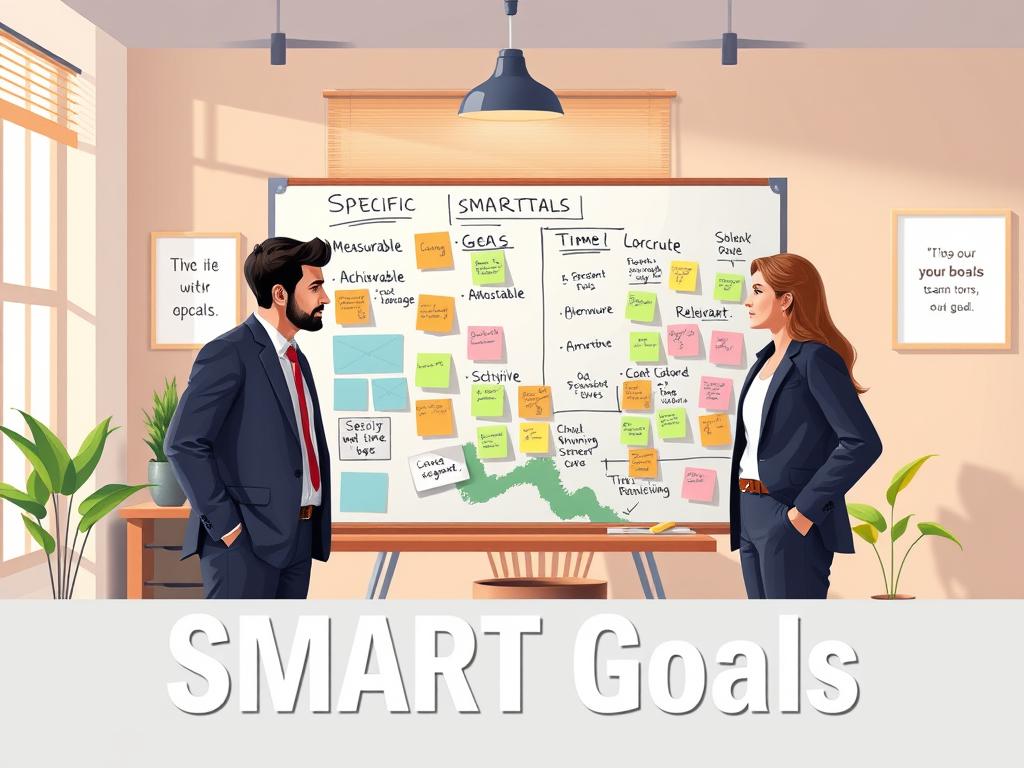
SMART stands for Specific, Measurable, Achievable, Relevant, and Time-bound. Being specific makes your goal clear. Measurable means you can track your progress easily. Achievable ensures the goal is realistic. Relevant means it fits with your bigger plans. Time-bound means there’s a deadline.
Studies show that SMART goals make your aims less vague and more accountable. Using clear measures helps you see how well you’re doing. Setting a deadline keeps you focused on finishing on time.
Steps to Develop SMART Objectives
- Specify: Make your goal detailed. Instead of just wanting to “improve sales”, aim to “increase monthly sales by 15%.”
- Make it measurable: Decide how you’ll measure success. This could be in dollars, percent, pages, or hours. Then, track your progress.
- Assess achievability: Choose a goal that’s hard but doable. Look at past data and what resources you have. Plan for any problems.
- Ensure relevance: Make sure your goal supports your bigger aims. This could relate to your company, personal values, or school goals.
- Set a deadline: Choose an end date and check-in points. Regular reviews help you stay on track and make changes if necessary.
Let’s take a simple example. A runner decides not just to “run more” but to “run a 10K in 12 weeks.” They plan weekly runs, cross-training, pick a race, and schedule check-ups. They measure progress by distance and pace. This way, the runner knows exactly how to reach their goal.
SMART goals, along with regular check-ins, keep you on track. You can adjust your plans based on your progress. This helps you stay motivated and achieve your goals one step at a time.
Establishing a Tracking System
A clear tracking system keeps effort focused and makes managing goals easier. Linking daily habits with long-term goals is crucial. This simple approach lets people see their progress and where they need to tweak things.
Daily, Weekly, and Monthly Tracking
Daily tracking involves noting down habits, small tasks, and what you do each day. Using a goal planner or habit tracker helps spot daily successes. Writing short journal entries and making to-do lists help keep the momentum going.
Each week, review what you’ve done and plan for the coming week. Tools like weekly planners and Trello lists help link daily actions to bigger goals. Make sure to have a regular time each week for this review.
Monthly reviews look at the bigger picture and check if you’re meeting your key goals. Tools like spreadsheets and Notion help spot trends over time. Use these moments to adjust your focus or how you’re using your time for your main goals.
Visual Tools: Charts and Checklists
Charts and dashboards show your progress visually. Tools like Google Sheets show how well you’re doing with easy-to-understand graphics. They help answer the question: am I on course?
Checklists and visual maps break down goals into easier steps. Tools like Gantt charts are great for time-sensitive projects. Using calendars helps keep up good habits with clear signals.
Keep your setup simple so it’s easy to use. Too many charts can make things confusing. Choose a few key visuals that you can check quickly and that work well with your goal tracker.
- Recommendation: map daily for habits, weekly for project tasks, monthly for strategic objectives.
- Implementation tip: set review times—Friday afternoons for weekly checks, first-of-month for monthly reviews.
- Automation: capture data from calendars, fitness devices, or time-tracking apps to lower manual work.
When the focus is on being easy to use and simple, tracking goals becomes a routine you can repeat. It helps teams and individuals make changes when needed and keep moving forward.
Measuring Progress
To track how well we’re doing, we need clear signs. These signs show if our actions are leading to our goals. Using a few key metrics helps us see patterns, identify problems, and keep moving forward. By regularly checking our progress through dashboards or spreadsheets, we stay on track.
Key Performance Indicators
KPIs measure how well we’re reaching our goals. Leading KPIs can predict what might happen next, like how many minutes you work out or the calls you make. Lagging KPIs show what has already happened, like weight loss or sales growth.
It’s best to focus on a few KPIs, between three and five, that you can act on and measure. For fitness, track minutes exercised (leading) and check your body fat (lagging). For sales, monitor your calls (leading) and your earned revenue (lagging). For school, watch your study hours (leading) and your grades (lagging).
How to Evaluate and Adjust Goals
Set times to review your goals, like every week or month. This helps you see if you’re off track. Use tools like Google Sheets to see your goal progress.
If you’re not hitting your goals, figure out why. Maybe your plan was too ambitious, or obstacles got in your way. Recording what you find helps you get better at setting goals.
Changing your plan might mean adjusting your deadlines or strategies. For instance, you might extend a deadline if you underestimated your workload. Maybe try new ways to achieve your leading KPIs. It’s okay to put less important goals on hold.
The table below shows how to set up goals with KPIs and when to check on them.
| Goal | Leading KPI | Lagging KPI | Review Cadence |
|---|---|---|---|
| Personal fitness | Weekly workout minutes | Weight lost / body fat | Weekly |
| Sales growth | Number of sales calls | Revenue growth | Monthly |
| Academic performance | Hours studied per week | Course grades | Biweekly |
Organize your goals, KPIs, and outcomes on a simple chart. Tools like Google Sheets show your progress clearly. This makes it easy to stay on track.
Keep a detailed record when you change your plan. This helps everyone understand changes and track progress better.
Overcoming Challenges in Goal Tracking
It’s tough to keep up with goals when life changes. This guide shows how to face obstacles and track goals better. By making small, steady changes, goal tracking becomes easier.
Common Obstacles
Goals get unclear without specifics. This makes it hard to track progress or even know where you stand.
Trying to do too much at once can spread your effort too thin. This makes it hard to keep a consistent tracking routine.
Getting stuck in the details and not taking action can happen. Changes in work, health, or family life can also upset your routines.
Strategies to Stay Motivated
Breaking big goals into smaller tasks can create quick wins. These wins keep you moving forward and show progress.
Teaming up with others through apps like Asana or Google Docs can help. Checking in regularly with someone makes tracking goals easier.
Habit stacking and “if-then” planning make goal tracking part of your day. Blocking out time for important tasks helps avoid missed updates.
Making a game out of tracking goals can be fun. Using visuals to see your progress and taking time to reflect helps during tough times.
Tactical Fixes for Tracking Lapses
Track just one main thing or a single daily habit to make it simpler. Restart a weekly review and use reminders to get back on track.
If you have too much on your plate, think about what’s really important. Focus on what matters and set aside less critical goals.
Celebrating Achievements
Recognizing progress keeps teams moving forward. Pausing to mark success helps track goals and maintain effort. A simple celebration ritual keeps everyone focused on future goals.
Recognizing Milestones
Milestones show important progress. They include finishing a project phase or reaching half a fundraising goal. Teams should track each milestone and update their progress regularly.
It’s key to choose how to recognize these moments. For personal goals, writing in a journal works. For team achievements, a public post or announcement is better. This helps showcase the team’s ability to meet its goals.
The Importance of Rewarding Success
Rewarding progress motivates us. Small rewards for minor goals and big celebrations for major ones encourage new targets.
Rewards should align with your goals. Buy something small for little wins. Choose dinner outings or trips for big milestones. Public praise or certificates are cost-effective morale boosters.
For teams, simple recognition means a lot. Emails, lunches, or bonuses keep teams engaged. Celebrations also are a time for planning ahead and learning from the past.
| Milestone Type | How to Mark It | Suggested Reward |
|---|---|---|
| Micro-goal (daily/weekly) | Check off in a planner or app; share a quick update with an accountability partner | Short break, coffee, or small treat |
| Midpoint (monthly/quarterly) | Update dashboard and send a team summary; document lessons learned | Team lunch, personal time off, or a modest purchase |
| Major milestone (project completion) | Public recognition, case study, and formal update to stakeholders | Weekend getaway, bonus, or company-wide celebration |
| Fundraising or sales target | Publish progress publicly; highlight contributors and next targets | Charity gift, celebratory event, or performance bonus |
Continuous Improvement and Goal Adjustment
To manage goals well, you need a clear plan for change. Watch for signs like missing targets, big life changes, new info, or milestones that change the game. These signs mean it’s time to rethink your goal’s size, timeline, or main goals.
Adjustments can include making the goal bigger or smaller, changing deadlines, updating main goals, breaking big goals into smaller ones, or dropping goals that aren’t important anymore. For instance, a sales team might lower their goals if the market goes down. An injured athlete might switch from running goals to cross-training goals. Consider how changes affect your long-term goals, the resources you need, what you might miss out on, and if the change fits your values or the company’s plan.
Thinking and analyzing help you get better. Have a routine of weekly, monthly, and quarterly check-ins to note successes, failures, why things happened, and what you learned. Mix looking at numbers with writing about what motivates you. Seeing trends helps guess future progress and how well teams can meet goals over time.
See each goal as a test. Think of a plan, try it, see what happens, and improve it. Keep a log of reflections in Notion, Evernote, or a journal. Ask yourself questions like, “What worked well?”, “What didn’t work?”, and “What will I change?”. Using goal tracking apps or planners helps build a mindset that cares about progress and adapts to changes in life and priorities.